Research Article | | Peer-Reviewed

Physicochemical, Nutritional and Sensory Characterization of Fresh and Dried Fermented Couscous Made from White-fleshed Sweet Potato and Cassava in Burkina Faso

Received: 17 October 2026     Accepted: 31 October 2026     Published: 16 November 2026
Views:       Downloads:
Abstract

White-fleshed sweet potato (Ipomoea batatas L.), grown in Burkina Faso, suffers from post-harvest losses despite its potential for food security and agri-food processing. The objective of this study was to characterize the physico-chemical and organoleptic properties of fresh and dried fermented couscous based on sweet potato and cassava developed. A total of six couscous formulations made from sweet potato and cassava were developed, comprising three dried formulations of the ‘gari’ type, named GP100, GP75M25 and GP50M50, and three fresh formulations of the ‘attieke’ type, named AP100, AP75M25 and AP50M50. The methodology involved determining the pH, acidity, particle size distribution, protein content, fat content and sensory characteristics using standardised methods. Carbohydrate content and energy value were calculated using a differential method and the Atwater coefficients, respectively. The results revealed that all samples had satisfactory physico-chemical, nutritional and organoleptic characteristics that were appreciated by the tasters. Also, the inclusion of sweet potato alters the nutritional profile of these products, with the energy value of gari ranging from 390.75 to 392.88 kcal and that of attieke from 395.73 to 396.45 kcal. A slight decrease in the scores for appearance and colour was observed for the 100 per cent potato formulations compared with those containing 75 per cent and 50 per cent. These new products would help to promote white-fleshed sweet potatoes.

Published in World Journal of Food Science and Technology (Volume 10, Issue 4)
DOI 10.11648/j.wjfst.20261004.12
Page(s) 98-117
Creative Commons

This is an Open Access article, distributed under the terms of the Creative Commons Attribution 4.0 International License (http://creativecommons.org/licenses/by/4.0/), which permits unrestricted use, distribution and reproduction in any medium or format, provided the original work is properly cited.

Copyright

Copyright © The Author(s), 2026. Published by Science Publishing Group

Keywords

White-fleshed Sweet Potato, Fermented Couscous, Physico-chemical, Nutritional and Organoleptic

1. Introduction
Sweet potato (Ipomoea batatas L.) is a perennial dicotyledonous plant belonging to the Convolvulaceae family. It originates from the tropical regions of Latin America. Among approximately 50 genera and more than 1,000 species of Convolvulaceae, I. batatas is the only cultivated plant of major economic importance. Within the genus Ipomoea, sweet potato is the only species that produces large edible tubers . These tubers may be elongated, round or oval in shape, with a smooth or rough surface and thin skin .
In Burkina Faso, sweet potato is a rapidly developing crop, dominated by white-fleshed varieties, which are the most widely consumed . The main production areas are located in the Cascades, West, Centre-West, South, Centre-South, Centre-East and East regions of Burkina Faso . They are found specifically in the provinces of Gourma, Kenedougou, Kouritenga, Nahouri and Sissili . It ranks third in Burkina Faso, after cereals and legumes, among all crops grown . It is of major nutritional interest for human food. Although it is among the most widely consumed tubers, products derived from its processing remain limited in diversity . The nutritional composition of white-fleshed sweet potato shows that, in addition to carbohydrates (86%), it contains protein (13.7–15.2% DM (Dry Matter)) and minerals such as magnesium (41–65.7 mg/100 g DM), iron (25.7–44.7 mg/100 g DM), zinc (1.9–2.4 mg/100 g DM), copper, manganese, calcium (85.9–266.8 mg/100 g DM) and potassium (1596–2341 mg/100 g DM) . In addition, it contains particular functional properties such as bioactive carbohydrates, flavonoids, anthocyanins and phenolic acids in its leaves and roots .
Cassava is the staple food of about 800 million people in sub-Saharan Africa, Asia and Latin America . It is mainly a source of carbohydrates, accounting for approximately 80 to 90% of its dry-matter composition. Its carbohydrate content consists mainly of starch, at about 80%, together with smaller amounts of sucrose (36–46 mg/g), glucose (5–14 mg/g) and maltose (2–19 mg/g) on a dry-weight basis. The protein content of sweet potato is relatively high, ranging from about 1.7 to 9% of dry matter, and appears higher than that of cassava, whose protein content generally ranges between 1 and 5% of dry matter . Cassava roots also contain vitamins A, C and E, as well as several minerals such as calcium (143–342 mg/100 g DM), magnesium (83.85–122.39 mg/100 g DM), sodium, potassium (1533.39–3065.35 mg/100 g DM), iron (7.7–60.6 mg/100 g DM), phosphorus and chloride . Cassava is a raw material widely valorised through the preparation of a variety of food products. It is notably processed into several traditional dishes, among which are attieke, placali, gari, attoukpou and tapioca .
Cassava-based products such as gari, tapioca and attieke are foods highly prized by the population of Burkina Faso, yet they are made from cassava. White-fleshed sweet potato is consumed boiled or fried.
Sweet potato and cassava are both tubers with similar technological characteristics. They are perishable commodities with a limited shelf life after harvest . Processing is an alternative and a means of obtaining products with a long shelf life, thereby reducing losses . However, the production of white-fleshed sweet potato couscous of the gari type and attieke is absent in the literature. Yet these dishes can constitute a food base capable of meeting the growing needs in terms of food availability and demand, under the effect of the growth of the rural and urban population of Burkina Faso .
Burkina Faso's current strategy is to explore and develop innovative processing methods to add value to local products.
With this in mind, the present study focuses on adding value to sweet potato produced in Burkina Faso through its partial or total use as a substitute for cassava in the production of fermented couscous.
The general objective of this study is to characterize the physico-chemical, nutritional and organoleptic properties of fresh and dried fermented couscous made from white-fleshed sweet potato.
2. Materials and Methods
2.1. Plant Material
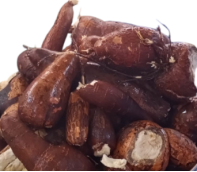
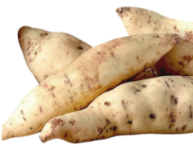
The plant material consisted of white-fleshed sweet potato (Figure 1) and cassava (Figure 2) tubers purchased from a producer in the town of Leo, the administrative centre of Sissili Province in the Nando region of Burkina Faso. The refined palm oil used as an ingredient was purchased in a market in the town of Ouagadougou.
Figure 1. White-fleshed sweet potato tuber.
Figure 2. Cassava tubers.
2.2. Product Formulation
Three formulations were developed by varying the proportions of cassava and white-fleshed sweet potato, with the addition of Cassava ferment amounting to 10% of the total formulation weight. The various formulations used to produce fresh and dried fermented couscous are presented in Table 1.
Table 1. Formulation of fresh and dried fermented couscous.

Product

Formulation

WFSP rate (%)

Cassava rate (%)

Dried fermented couscous (gari)

GP50M50

50

50

GP75M25

75

25

GP100

100

0

Fresh fermented couscous (attieke)

AP50M50

50

50

AP75M25

75

25

AP100

100

0

WFSP: White-Fleshed Sweet Potato, G: gari, P: sweet potato, M: Cassava, A: attieke
2.3. Production Method
2.3.1. Pretreatment of the Raw Material
The cassava and sweet potato tubers were carefully washed to remove any impurities, then peeled and cut into slices.
2.3.2. Ferment Production
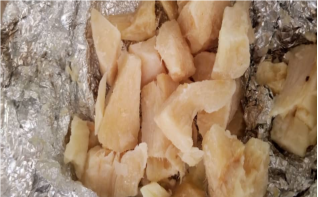
Fermentation of the cassava paste for the production of attieke and gari requires the use of a starter containing the lactic acid bacteria responsible for fermentation.
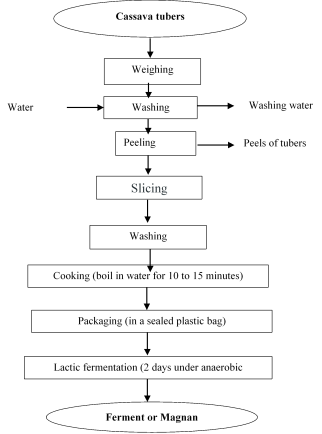
To produce this starter, cassava tubers were washed, peeled and cut into slices about 5 to 7 cm in size before being boiled for 10 to 15 minutes. The fermentation occurred naturally for 72 hours (3 days) at ambient temperatures of 25–30°C. The fermentation was carried out using microorganisms naturally present in the raw material. The diagram in Figure 3 presents the different steps in producing the starter, or “magnan” (Figure 4).
Figure 3. Diagram of magnan (starter) production .
Figure 4. Cassava-based ferment.
2.3.3. Tuber Paste Production
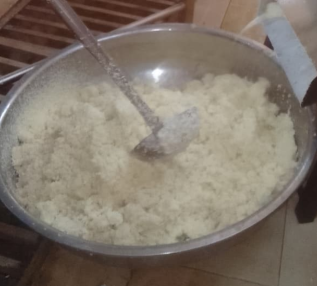
The tuber slices were mixed according to the different formulations and ground to obtain a homogeneous paste, following the formulations defined in Table 1 (different rates of cassava, WFSP and cassava ferment), and 2% palm oil was added to obtain the paste (Figure 5).
Figure 5. Tuber paste.
The percentage of cassava-based starter and the percentage of oil refer to the percentage of the formulation mixture.
2.3.4. Couscous Production
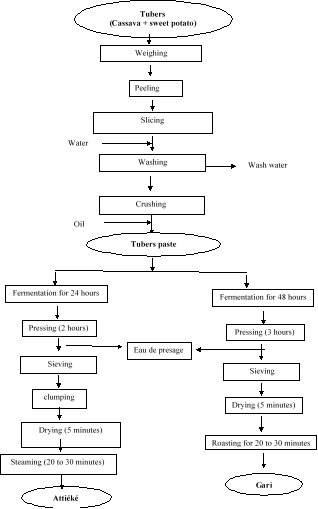
The diagram in Figure 6 presents the different steps in the production of tubers paste, gari and attieke.
Figure 6. Diagram showing the production of tubers paste, attieke and gari at PDCB (Diagram adapted from Lingani and al. .
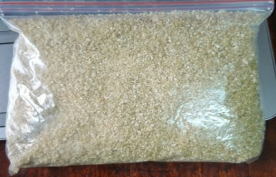
To produce dried couscous, type gari, after the pretreatment steps, the transformation of the cassava and white-fleshed sweet potato mixture into gari follows several successive steps. The mixture is first subjected to fermentation at room temperature for about 48 hours. At the end of fermentation, the paste is drained and then pressed for 2 to 4 hours to remove excess water and reduce its moisture content. The pressed product is then crumbled and sieved through a 2 mm mesh sieve to obtain granules of homogeneous size and the characteristic texture of gari. The granules are then spread out in the shade and subjected to pre-drying for about 5 minutes before the roasting step. Roasting is carried out in a pan over a fire for 20 to 30 minutes, with continuous stirring, until a dry product with the characteristics of gari is obtained (Figure 7).
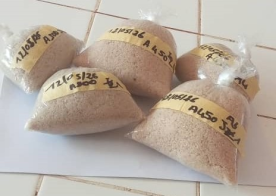
Regarding production fresh couscous, type attieke once pre-processing is complete, the mixture of cassava and white-fleshed sweet potato was subjected to fermentation at room temperature for about 24 hours. After fermentation, the paste is drained and then pressed for about 2 hours to remove excess water and obtain a paste of the appropriate consistency. The pressed product is then crumbled and sieved to obtain a fine, homogeneous texture. This paste is then granulated, a process that involves placing it in a bowl and applying hand-tapping movements to form regular grains. The resulting grains are spread out in the shade for about 5 minutes for light drying before being steamed. This final step consists of steam cooking, which ensures gelatinization of the starch and gives attieke its characteristic texture. After cooking, the attieke is packed hot into airtight bags for storage and for physico-chemical and sensory analyses. This method produces an attieke made from white-fleshed sweet potatoes, as illustrated by the Figure 8.
Figure 7. Dried couscous, gari type. Dried couscous, gari type.
Figure 8. Fresh couscous, attieke type.
2.4. Physicochemical Analyses
The physicochemical analyses were carried out at the physico-chemistry laboratory of the Food Technology Department (DTA) of IRSAT/Ouagadougou. These different analyses were carried out in duplicate. Replicates represent repeated measurements of the same batch.
2.4.1. pH Measurement
pH measurements of the gari and attieke samples were carried out by potentiometry using a pH meter according to AOAC method 945.10 (2000) . Before use, the pH meter was calibrated using pH 4.7 and pH 10 buffer solutions.
2.4.2. Moisture Content
The water content of the attieke and gari formulations was determined according to ISO 665 (2020) by drying at 105°C ± 2°C in an oven until a practically constant mass was obtained the operation according to the formula:
Moisture g100gFM=PE-Pf-P0PE×100(1)
Pe = test load, Po = empty weight of the nacelles, Pf = final weight (nacelle + test load); FM = fresh material.
2.4.3. Determination of Acidity
Titratable acidity was determined by acid-base titration of a sample solution according to the AOAC method (2000) . The free fatty acids present in the solution were assayed by titration with a 0.1 N sodium hydroxide (NaOH) solution. The amount of lactic acid present was determined using the following formula:
Titratable acidity (g lactic acid / 100 g FM) =
N x(V-Vb) x Vt/(VPx Pe)x 0.090 ×100 (2)
N: normality 0.1
V: volume of NAOH used in the titration
Vt: total volume of the sample
VP: volume of the test sample
Vb: volume of NAOH for the blank
Pe: test sample
FM: fresh material
0.090: Conversion factor (to lactiq acid)
2.4.4. Particle Size Determination
The particle size of the attieke and gari formulations was determined according to the method of Melcion (2000) . The principle consists of separating the different particle-size fractions of a sample using a set of sieves and determining their proportions. The median particle size (MPS) is the sieve size through which more than 50 per cent of the sample passes. It was determined by calculating the percentage of the sample retained on each sieve using the formula below:
% E = ((Mf - Mv) ×100)/(Pe) (3)
Mf: Final mass (sieve containing part of the sample)
Mv: Empty mass of the sieve
% E: Percentage of the sample
Pe: Test portion
2.5. Determination of Nutritional Characteristics and Energy Value
Also, nutritional analyses were carried out at the physico-chemistry laboratory of the Food Technology Department (DTA) of IRSAT/Ouagadougou. These different analyses were carried out in duplicate. Replicates represent repeated meas-urements of the same batch.
2.5.1. Determination of Fat Content
Fat content was extracted by the Soxhlet method using hexane as a solvent, according to ISO 659 (2009) . The extraction was carried out hot (60 70°C) by soaking followed by rinsing the sample with hexane. The lipid content was determined by weighing after evaporation of the hexane using.
Procedure: Five grams (5g) of flour were weighed directly in a paper cartridge and covered with dehydrated cotton and placed in soxhlet extractors. In a 250 ml balloon, previously weighed (PV). 200 ml of hexane was introduced. The device is supplied with running water. The flask is gently heated to 60°C - 70°C for 4 hours. Each time the soxhlet fills with solvent, it siphons. That is, it flows back to the tank. After extraction, the solvent was evaporated with rotavapor. The flask containing the fat is placed in an oven for 1 hour to remove traces of solvent and then cooled with a desiccator. The flask is weighed (Pf) to constant weight and the fat content is expressed as a percentage by weight according to the following relationship:
Fat (g/100g DM) = [((Pf - Pv) ×100) / (Pe)]
× 100 / (100-H)(4)
Fat (g/100g DM): lipid content relative to dry matter;
Pf: final weight (ball + fat);
Pv: empty weight of the balloon;
Pe: test portion;
%H: percentage by mass of water previously determined
DM: Dry matter
2.5.2. Ash Content
Ash content was obtained according to ISO 2171 (2023) by incineration at 550 ± 10°C until complete combustion of the organic matter, followed by weighing of the resulting residue. This method consists of a differential weighing of the samples before and after dry mineralization. The calculation was performed using the following formula:
Ash (g/100g DM) = [((Pf-P0) × 100)/Pe] ×100/(100-H) (5)
Ash (g/100g DM): ash content relative to dry matter
P0: Empty weight of the crucibles
Pf: Final weight (crucible + calcined sample)
PE: Test batch
DM: Dry matter
H: Water content
2.5.3. Protein Content
Total protein was determined according to ISO 1871 2009 using the Kjeldahl method. This method is based on the determination of total nitrogen. The organic nitrogen of the samples to be analysed is converted into mineral nitrogen in ammoniacal form through the oxidizing action of concentrated boiling sulphuric acid in the presence of a catalyst. After displacement with sodium hydroxide, the ammonia is distilled and then titrated in the presence of a coloured reagent by acidimetry. The total protein content is calculated by multiplying the nitrogen content by a conversion factor (5.7), corresponding to 16% nitrogen in proteins. Procedure: In a Kjeldahl flask, 1 g of the sample (PE), a Kjeltabs catalyst pellet and 10 ml of concentrated sulfuric acid were introduced. The mixture was subjected to mineralization for 4 hours at 400°C until a completely discolored solution was obtained. The mineralizat was then cooled and its volume will be completed to 50 ml with distilled water before being neutralized by a 40% NaOH solution. The neutralized solution is distilled and the ammonia solution collected in an Erlenmeyer flask. Distillation is stopped when the final volume in the Erlenmeyer flask reaches 150 ml. The distillate is then titrated with 0,1 N sulphuric acid solution until the colour indicator changes from green to pink. The volume of sulfuric acid (VE) is then recorded. A blank is made using the same procedure by replacing the sample with distilled water. The protein content was determined from the nitrogen content using the following formulas:
Protein (g/100g DM) = ([6,25 × 0,014 × 0,1 × (Ve-Vb) × 100] /Pe) x 100/100-%H(6)
Protein (g/100 g/DM): protein content relative to dry matter
Ve: volume of acid at the equivalence point;
Vb: volume of the blank;
Pe: test sample.
%H: Moisture Content
Dry matter: DM
2.5.4. Determination of the Total Sugar Content
The total carbohydrate content was determined using the differential method Egan et al. according to the formula:
Carbohydrate (g/100 g DM) = 100 – (Water + Protein + Fat + Ash)(7)
2.5.5. Determination of the Energy Value
Energy value was calculated using the specific coefficients of Merrill and Watt , according to the following formula:
Energy value (kcal/100 g) = ((4× % Protein/DM) + (4× % Total Carbohydrates/DM) + (9× % Fat/DM))(8)
2.5.6. Sensory Analyses
Sensory analysis was carried out at the Food Technology Department (DTA) of IRSAT/Ouagadougou. For the three formulations of each product, three (03) combinations were required to reduce the first-order effect, resulting in 06 possible combinations. These six (6) combinations have been repeated three (3) or four (4) times and result in 18 and 24 tasters depending on their availability for the statistical evaluation of product preference. In pratice, the dried couscous (gari-style) was tasted by a panel of 19 tasters, whilst the fresh couscous (attieke-style) was tasted by 24 tasters, comprising men and women aged over 15, including students from several universities and staff members of the DTA. Samples were coded using a combination of three (03) digits to avoid data bias. These codes were chosen from the Cochran and Cox random allocation table .
The samples were placed in bowls and set out on trays by combination, together with a sachet of water for rinsing the mouth between two samples and the evaluation form.
Sensory test
Three (03) tests were selected for the sensory analysis, namely the sensory profile, the hedonic test and the ranking test. All methods were carried out in accordance with current guidelines and regulations. The three tests were conducted simultaneously.
The sensory profile was assessed in accordance with ISO 11035 (ISO, 1995). The aim of this test was to describe the products and assign an identity to each one. Panelists were asked to describe the colour, appearance, texture, odour and taste using 5-point scales, as summarised in Table 1.
The hedonic tests were used to measure the degree of liking for the protein curd samples by selecting the appropriate category (Table 2 & Table 3). The tasters were asked to rank the samples at the end of the hedonic test . The evaluation criteria are summarised in Table 2 and Table 3.
Table 2. Descriptors, parameters and assessment scores for couscous gari type.Descriptors, parameters and assessment scores for couscous gari type.Descriptors, parameters and assessment scores for couscous gari type.

Sensory descriptors

Gari type couscous parameter

Assigned grades

Color

Bright white

5

White

4

Dirty white

3

Grey

2

Dark gray

1

Appearance

Very beautiful

5

Beautiful

4

Quite beautiful

3

Fairly beautiful

2

Not beautiful

1

Smell

Highly fermented

5

Fermented

4

Quite fermented

3

Moderately fermented

2

Not fermented

1

Taste

Very pleasant

5

Pleasant

4

Quite pleasant

3

Unpleasant

2

Very unpleasant

1

Acidity

Very acidic

5

Acid

4

Quite acidic

3

Slightly acidic

2

Not acidic

1

Aftertaste

Not bitter

5

A little bitter

4

Quite bitter

3

Bitter

2

Very bitter

1

Particle heterogeneity

Very heterogeneous

5

Heterogeneous

4

Fairly homogeneous

3

Homogeneous

2

Very homogeneous

1

Particle size

Very coarse

5

Coarse

4

Fairly coarse

3

Small

2

Very small

1

Sweet potato taste sensation

Very pronounced

5

Pronounced

4

Quite pronounced

3

Slightly pronounced

2

Degree of drying

Very dry

1

Dry

5

Quite dry

4

A little dry

3

Not dry

2

Sweet taste

Very sweet

1

Sugar

5

Quite sweet

4

Slightly sweet

3

Not sweet

2

Absent

1

Hedonic

I like it very much

5

I like

4

Indifferent

3

I like it a little

2

I don't like it at all

1

Ranking

Rank 1

1

Rank 2

2

Rank 3

3

Table 3. Descriptors, parameters and assessment scores for couscous Attieke type.

Sensory descriptors

Attieke type couscous parameter

Assigned grades

Color

Bright white

5

White

4

Dirty white

3

Grey

2

Dark gray

1

Appearance

Very beautiful

5

Beautiful

4

Quite beautiful

3

Fairly beautiful

2

Not beautiful

1

Smell

Very good

5

Good

4

Pretty good

3

Fairly good

2

Not good

1

Taste

Very pleasant

5

Pleasant

4

Quite pleasant

3

Quite pleasant

2

Unpleasant

1

Acidity

Very acidic

5

Acid

4

Quite acidic

3

Slightly acidic

2

Not acidic

1

Particle size

Very coarse

5

Coarse

4

Fairly coarse

3

Small

2

Very small

1

Sweet potato taste sensation

Very pronounced

5

Pronounced

4

Quite pronounced

3

Slightly pronounced

2

Absent

1

Hedonic

I like it very much

5

I like

4

Indifferent

3

I like it a little

2

I don't like it at all

1

Ranking

Rank 1

1

Rank 2

2

Rank 3

3

2.6. Data Analysis
The Excel workbook was used for entering data on physico-chemical and sensory parameters, calculating averages and standard deviations. The statistical analysis of sensory test data was carried out using XLSTAT software. Turkey was used to compare statistical averages of data with a significance level of 5% and a confidence level of 95%. For the sensory profile, the average and standard deviations of the notes were calculated for each formulation.
3. Results
3.1. Physicochemical and Nutritional Characteristics of Dried Couscous (Gari-type)
Table 4 presents the physicochemical and nutritional characteristics of gari.
Table 4. Physicochemical and nutritional characteristics of gari.

Physicochemical parameter

GP100

GP50M50

GP75M25

Pr > F

Moisture (g/100g FM)

4.59 ± 0.02a

9.20 ± 0.01d

8.54 ± 0.05c

0.0001

pH

3.535 ± 0.01a

4.04 ± 0.04c

3.70 ± 0.07b

0.0036

Titratable acidity (g lactic acid / 100 g FM)

7.31 ± 0.43b

3.98 ± 0.21a

3.99 ± 0.22a

0.0024

Ash (g/100g DM)

2.18 ± 0.05a

2.47 ± 0.32a

2.01 ± 0.06a

0.1941

Protein (g/100g DM)

5.33 ± 0.09c

3.17 ± 0.09a

3.81 ± 0.13b

0.0005

Fat (g/100g DM)

0.12 ± 0.01a

0.12 ± 0.00a

0.18 ± 0.00b

0.001

Carbohydrates (g/100g DM)

92.36 ± 0.04a

94.24 ± 0.41b

94.01 ± 0.07b

0.0082

Energy values (Kcal/100g DM)

391.88 ± 0.16a

390.75 ± 1.29a

392.88 ± 0.22a

0.1453

Values without an identical superscript letter within a row are considered significantly different (p < 0.05).
Legend: GP50M50: gari made from 50% sweet potato and 50% cassava; GP75M25: gari made from 75% sweet potato and 25% cassava; GP100: gari made from 100% sweet potato.
The water content, pH and acidity of the different gari formulations ranged respectively from 4.59 to 9.20 g/100 g DM; 3.53 to 4.04; and 3.98 to 7.31 g/100 g DM. The highest acidity and lowest pH were found in the GP100 formulation. Statistical analyses indicate a significant difference between the water content, pH and acidity values.
The analyses also indicate a significant difference between the protein, fat and carbohydrate contents (g/100 g DM) of the different formulations, with values ranging respectively from 3.17 to 5.33; 0.12 to 0.18; and 92.36 to 94.24. Ash content ranged from 2.01 to 2.47 g/100 g dry matter (DM), while energy values ranged from 390.75 to 392.88 kcal/100 g DM. The results show that there is no significant difference between the ash content and energy values of the different samples.
The highest protein content was observed in the GP100 formulation and the lowest in the GP50M50 formulation.
Table 5 presents the particle size distribution of the different gari formulations.
Table 5. Particle size distribution of gari grains.

Sample

Grain diameter

Proportion (%)

Size

GP50M50

> 1.4 mm

20 ± 6.36

Large

1.4mm > d > 1 mm

31 ± 4.24

Medium

1 mm > d > 450 µm

48 ± 9.90

Small

450 µm > d > 250 µm

0.8 ± 0.57

Very fine

< 250 µm

0.2 ± 0.00

Extra fine

GP75M25

> 1.4 mm

38.1 ± 1.27

Large

1.4mm > d > 1 mm

35.7 ± 5.80

Medium

1 mm > d > 450 µm

26.4 ± 8.49

Small

450 µm > d > 250 µm

0.2 ± 0.00

Very fine

< 250 µm

0.1 ± 0.14

Extra fine

GP100

> 1.4 mm

44.7 ± 4.95

Large

1.4mm > d > 1 mm

36.3 ± 1.27

Medium

1 mm > d > 450 µm

18.6 ± 5.94

Small

450 µm > d > 250 µm

0.2 ± 0.28

Very fine

< 250 µm

0.2 ± 0.14

Extra fine

The particle size of GP50M50 gari was characterized by smaller particles, while the GP75M25 and GP100 samples had larger particles. This observation suggests that an increase in the proportion of sweet potato in the formulation promotes an increase in the size of gari granules. This phenomenon could be attributed to the highwater content of sweet potato, which promotes particle agglomeration during processing and leads to the formation of larger granules.
3.2. Organoleptic Characteristics of Dried Couscous (Gari-type)
3.2.1. Sensory Profile of Dried Couscous (Gari-type)
Table 6 present the sensory profiles and the comparison of mean sensory parameters.
Table 6. Sensory profile of gari formulations.Sensory profile of gari formulations.Sensory profile of gari formulations.

Sensory parameter

GP75M25

GP50M50

GP100

Pr > F

Appearance

3.83 ± 1.03a

2.79 ± 0.99b

3.15 ± 0.99ab

0.009

Colour

3.06 ± 0.88a

2.00 ± 1.06b

2.40 ± 0.75ab

0.003

Odour

2.33 ± 1.03a

2.21 ± 1.19a

2.20 ± 1.11a

0.921

Acidity

2.44 ± 1.12b

3.42 ± 1.10a

2.65 ± 0.99ab

0.018

Taste

4.17 ± 0.50a

3.63 ± 0.38b

3.90 ± 0.55ab

0.006

Aftertaste

4.83 ± 0.84a

4.58 ± 0.38a

4.60 ± 0.60a

0.411

heterogeneity

3.28 ± 0.76a

3.63 ± 0.83a

3.05 ± 1.00a

0.121

Particle size

2.50 ± 0.60a

2.84 ± 0.51a

2.55 ± 0.69a

0.185

Sweet-potato taste sensation

2.22 ± 1.16a

2.32 ± 1.11a

1.80 ± 0.95a

0.287

Degree of drying

4.28 ± 0.85a

4.21 ± 0.75a

4.00 ± 0.79a

0.537

Sweetness

1.33 ± 0.77a

1.42 ± 0.59a

1.30 ± 0.66a

0.849

Hedonic score)

4.33 ± 1.02a

3.47 ± 0.84b

3.85 ± 1.04ab

0.034

The statistical results revealed that the tasters detected no significant differences between the three gari formulations in terms of odour, aftertaste, particle heterogeneity, particle size, perceived sweet potato flavour, degree of drying and sweetness. For all three gari formulations, the tasters considered the odour to be non-fermented, with average scores ranging from 2.20 ± 1.11 to 2.33 ± 1.03. They also described the aftertaste of the three formulations as not bitter, with average scores ranging from 4.58 ± 0.38 to 4.83 ± 0.84.
The particle size of the different gari formulations was judged to be fairly uniform, with average scores ranging from 3.05 ± 1.00 to 3.63 ± 0.83. Furthermore, the tasters rated the particles as small, with average scores ranging from 2.50 ± 0.60 to 2.84 ± 0.51. The tasters considered that the characteristic sweet potato flavour was absent in the various formulations, awarding them average scores ranging from 1.80 ± 0.95 to 2.32 ± 1.11. As regards the degree of drying, the tasters considered that the three formulations were well dried, awarding them average scores ranging from 4.00 ± 0.79 to 4.28 ± 0.85. Finally, the natural sweetness present in fresh sweet potatoes was not detected in the finished products. Indeed, the tasters reported a lack of sweetness in all three formulations, with average scores ranging from 1.30 ± 0.66 to 1.42 ± 0.59.
With regard to the other sensory parameters, such as appearance, colour, sourness, taste and hedonic rating, the results of the analysis show a significant difference between the samples. The GP50M50 sample was described by the tasters as having an attractive appearance, an off-white colour, a slightly tart taste (31.6 per cent of tasters) and a pleasant taste, with average scores of 2.79 ± 0.99; 2.00 ± 1.06; 3.42 ± 1.10; and 3.63 ± 0.38. The GP75M25 sample was described by the tasters as having an attractive appearance, a grey colour, a slightly tangy taste and a pleasant taste, with respective average scores of 3.83 ± 1.03; 3.06 ± 0.88; 2.44 ± 1.12; and 4.17 ± 0.50. The GP100 sample was described by the tasters as having a fairly pleasant appearance, a off-white colour, a tangy taste and a pleasant flavour, with average scores of 3.15 ± 0.99; 2.40 ± 0.75; 2.65 ± 0.99; and 3.90 ± 0.55 respectively.
3.2.2. Hedonic of Dried Couscous (Gari-type)
The results of the hedonic and ranking test are shown in Figure 9.
Figure 9. Hedonic and ranking test of gari.Hedonic and ranking test of gari.
The results showed a significant difference in the tasters’ hedonic ratings between the three gari formulations (Table 6). The GP50M50 sample was the most popular. Indeed, 52.6 per cent and 36.8 per cent of the tasters ‘really liked’ and ‘liked’ it respectively. For the GP75M25 sample, 26.3 per cent of the tasters said they ‘really liked’ it, whilst 42.1 per cent said they ‘liked’ it. In contrast, the GP100 sample received the lowest levels of approval, with 10.5 per cent of tasters ‘really liking’ it and 47.4 per cent ‘liking’ it. The tasters ranked the GP50M50 gari in first place, followed by the GP75M25 in second place and the GP100 in third place. This ranking indicates that tasters’ preferences vary depending on the formulation. An increase in the proportion of sweet potato in the gari led to a decrease in tasters’ preference. However, all formulations were generally well received.
3.3. Physicochemical and Nutritional Characteristics of Fresh Couscous, Attieke -type
Table 7 presents the physicochemical and nutritional characteristics of the attieke formulations, and Table 8 presents the particle size distribution of the attieke samples.
Table 7. Physicochemical and nutritional characteristics of attieke.Physicochemical and nutritional characteristics of attieke.Physicochemical and nutritional characteristics of attieke.

Physicochemical and nutritional parameter

AP50M50

AP75M25

AP100

Pr > F

pH

3.90 ± 0.00a

3.63 ± 0.00b

3.62 ± 0.00b

0.000

Acidity (g lactic acid / 100 g FM)

2.23 ± 0.00a

2.63 ± 0.01b

2.63 ± 0.01b

0.0353

Moisture (g/100g FM)

51.19 ± 0.20c

59.37 ± 0.26a

56.83 ± 0.57b

0.000

Ash (g/100g DM)

1.21 ± 0.02a

1.04 ± 0.00a

1.05 ± 0.05a

0.1510

Fat (g/100g DM)

0.12 ± 0.00a

0.10 ± 0.01a

0.10 ± 0.02a

0.5999

Protein (g/100g DM)

2.92 ± 0.01a

3.71 ± 0.02c

3.49 ± 0.00b

0.0006

Carbohydrates (g/100g DM)

95.73 ± 0.01b

95.13 ± 0.04a

95.39 ± 0.16b

0.0213

Energy values (Kcal/100g DM)

395.73 ± 0.16a

396.34 ± 0.05a

396.45 ± 0.65a

0.2839

Values without an identical superscript letter within a row are considered significantly different (p < 0.05).
Legend: AP50M50: attieke made from 50% sweet potato and 50% cassava; AP75M25: attieke made from 75% sweet potato and 25% cassava; AP100: attieke made from 100% sweet potato.
Table 8 presents the particle size distribution of the different attieke formulations.
Table 8. Particle size distribution of attieke grains.Particle size distribution of attieke grains.Particle size distribution of attieke grains.

Sample

Grain diameter

Proportion (%)

Size

AP50M50

> 1.4 mm

39.2 ± 5.94

Large

1.4mm > d > 1 mm

30 ± 0.85

Medium

1 mm > d > 450 µm

16.4 ± 3.68

Small

450 µm > d > 250 µm

7.2 ± 0.28

Very fine

< 250 µm

7.2 ± 0.00

Extra fine

AP75M25

> 1.4 mm

37.6 ± 10.75

Large

1.4mm > d > 1 mm

20.8 ± 3.68

Medium

1 mm > d > 450 µm

16.2 ± 0.28

Small

450 µm > d > 250 µm

13.2 ± 0.00

Very fine

< 250 µm

12.2 ± 0.00

Extra fine

AP100

> 1.4 mm

59.3 ± 0.71

Large

1.4mm > d > 1 mm

25.2 ± 0.85

Medium

1 mm > d > 450 µm

13.5 ± 0.14

Small

450 µm > d > 250 µm

2 ± 0.14

Very fine

< 250 µm

0 ± 0.00

Extra fine

Statistical analyses indicate a significant difference between the water, pH and acidity contents of the different attieke formulations, with values ranging respectively from 51.19 to 59.37 g/100 g FM; 3.62 to 3.90; and 2.23 to 2.63 g/100 g DM. The highest acidity and lowest pH were found in the AP100 formulation.
Regarding the particle size distribution of attieke formulations, this table shows that all samples AP50M50, AP100, and AP75M25 are all large sizes.
The analyses also indicate a significant difference between the protein and carbohydrate contents (g/100 g DM) of the different formulations, ranging respectively from 2.92 to 3.71 and from 95.13 to 95.73. The highest protein content was observed in the AP75M25 formulation and the lowest in the AP50M50 formulation. However, the results show no difference between the ash content, fat content and energy values of the samples, which ranged respectively from 1.04 to 1.21 g/100 g DM, 0.10 to 0.12 g/100 g DM, and 395.73 to 396.34 kcal/100 g DM.
3.4. Organoleptic Characteristics of Fresh Couscous, Attieke -type
3.4.1. Sensory Profile of Fresh Couscous (Attieke-type)
Table 9 present the sensory profiles of the three attieke formulations and the comparison of their mean sensory parameters.
Table 9. Sensory profile of attieke formulations.Sensory profile of attieke formulations.Sensory profile of attieke formulations.

Sensory parameter

AP50M50

AP75M25

AP100

Pr > F

Appearance

3.96 ± 0.99a

3.96 ± 0.66a

3.00 ± 0.62b

0.000

Colour

3.46 ± 0.83a

3.33 ± 0.93a

2.54 ± 0.70b

0.000

Odour

3.50 ± 0.72ab

3.75 ± 0.80a

3.13 ± 0.79b

0.023

Taste

3.67 ± 0.64a

3.58 ± 0.65a

3.37 ± 0.83a

0.347

Acidity

3.46 ± 1.18a

2.04 ± 1.2b

3.29 ± 0.86a

0.000

Texture

3.08 ± 0.72a

3.13 ± 0.70a

2.83 ± 0.74a

0.322

Perception of sweet-potato taste

1.80 ± 0.95a

1.83 ± 1.13a

1.83 ± 1.09a

0.988

Hedonic score

3.46 ± 1.18a

3.75 ± 1.30a

3.04 ± 1.19a

0.139

Values without an identical superscript letter within a row are considered significantly different (p < 0.05).
The statistical results revealed that the tasters detected no significant difference between the three attieke formulations in terms of taste, texture and the perceived flavour of sweet potato. Indeed, for all three attieke formulations, the tasters rated the flavour as pleasant, with average scores ranging from 3.37 ± 0.83 to 3.67 ± 0.64. Furthermore, they considered the particles to be of medium size, corresponding to average scores ranging from 2.83 ± 0.74 to 3.13 ± 0.70. Finally, they reported a marked absence of sweet potato flavour, corresponding to average scores ranging from 1.80 to 1.83.
With regard to the other sensory parameters of attieke, such as appearance, colour, odour and tangy taste, the results of the analysis show a significant difference between the samples. The AP50M50 sample was described by the tasters as having an attractive appearance, an off-white colour, a pleasant smell and a slightly tangy taste, corresponding to average scores of 3.96 ± 0.99, 3.46 ± 0.83, 3.50 ± 0.72 and 3.46 ± 1.18 respectively.
Sample AP75M25 was described by the majority of tasters as having an attractive appearance, a white colour, a good aroma and a rather acidic taste, with average scores of 3.96 ± 0.66, 3.33 ± 0.93, 3.75 ± 0.80 and 2.04 ± 1.2 respectively.
Sample AP100 was described by the majority of tasters as having an attractive appearance, a off-white colour, a pleasant aroma and a rather acidic taste, with average scores of 3.00 ± 0.62, 2.54 ± 0.70, 3.13 ± 0.79 and 3.29 ± 0.86 respectively.
3.4.2. Hedonic of Fresh Couscous (Attieke-type)
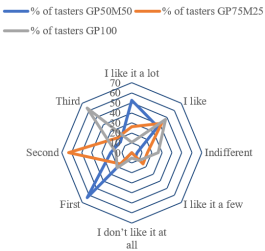
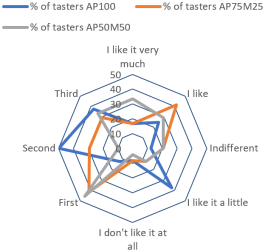
The results of the hedonic and ranking test are shown in Figure 10.
Figure 10. Hedonic and ranking test of attieke.Hedonic and ranking test of attieke.
The results showed no significant difference in tasters' hedonic appreciation between the three formulations (Table 8). Indeed, for the AP50M50 sample, 33.3% of tasters said they “liked it a lot” and 29.2% “liked” it. For the AP75M25 sample, 16.7% of tasters “liked it a lot” and 41.7% “liked” it. Finally, for the AP100 sample, 16.7% of tasters said they “liked it a lot”, while 25.0% “liked” it.
Attieke formulated from 50% sweet potato and 50% cassava (AP50M50) was ranked first by tasters, followed by the AP75M25 sample, while the AP100 sample was ranked third. This preference could be explained by the fact that the formulations combining sweet potato and cassava have organoleptic characteristics particularly in terms of taste, texture and odour closer to those of traditional attieke.
4. Discussion
The water content of the three gari formulations is close to that reported by Akely and al. , who found water contents for gari ranging from 4.49% to 10.24%. The water contents of the different gari formulations comply with the FAO recommendation, which sets a maximum water content of 12.0% for this product. The low water content observed across all gari formulations can be attributed to the effectiveness of the roasting process, which promotes a substantial reduction in moisture. This low moisture content is an essential factor for product preservation, as it limits the development of micro-organisms and slows spoilage reactions, thereby helping to extend shelf life.
The acidity levels and pH values of the three gari formulations are respectively higher and lower than those of cassava gari. The low pH and high acidity of the three gari formulations may be attributed to extensive fermentation resulting from the high sugar content of sweet potato compared to cassava, which produces organic acids. The acidity levels of the gari are higher than those observed by Kegah & Ndjouenkeu , who obtained acidity levels ranging from 0.7 to 3.2%, and than those observed by Oduro et al. , who found contents ranging from 0.63% to 1.55% in cassava gari. The pH values of the three gari formulations are slightly lower than those of cassava gari reported by Adedola et al. , who found values ranging from 5.73 ± 0.01 to 6.51 ± 0.01 in their study.
The ash and protein contents of the three gari formulations are higher than those of cassava gari. These higher mineral contents can be explained by the addition of sweet potato, which contains more protein and micronutrients than cassava. Ash content is an indicator of the total amount of minerals present in the food. The ash contents of the three gari formulations are higher than those reported by Atuna et al. , who found ash contents for cassava gari ranging from 1.28 ± 0.04% to 1.93 ± 0.03%. These contents are also higher than those found by Adepoju et al. , who found values ranging from 1.89 ± 0.10 to 2.15 ± 0.30%. The protein contents are higher than those reported by Atuna et al. , who found protein contents for cassava gari ranging from 1.37 ± 0.10 to 1.58 ± 0.15%. They are also higher than those found by Adepoju et al. of 1.5 ± 0.01% for cassava gari.
The particle size of the gari formulations depends on the proportion of sweet potato. This indicates that the higher the proportion of sweet potato in the formulation, the larger the gari particle size tends to be, since sweet potato has a high water content that promotes the formation of coarser grains. These results are higher than those of Ahouansou et al. , who worked on cassava-based gari and found a particle size below 1.3 mm.
Fat content was low across all three gari formulations, while carbohydrate content was high. Their fat content is lower than that reported by Adepoju et al. , which was 0.3 ± 0.02 to 0.6 ± 0.02% for cassava gari. Olayinka et al. also obtained a higher fat content for cassava gari, ranging from 1.31 ± 0.01% to 2.11 ± 0.05%. Sweet potato and cassava are both very low in fat. However, it is noted that cassava contains more fat than sweet potato.
Their carbohydrate contents are higher than those found by Akely et al. , who reported a slightly lower carbohydrate content for gari, ranging from 86.34% to 90.89%. This can be explained by the addition of sweet potato, which contains more sugar than cassava.
The energy values of gari are higher than those found by Adedola et al. , who obtained values ranging from 357.60 to 391.80 kcal.
The difference observed in the sensory tests with respect to appearance, colour, sourness and taste of the three gari formulations is related to the cassava content of the formulation. An increase in cassava content makes the colour lighter and more attractive. The colour of the samples evolves from dark grey for the GP100 sample to dirty white for the GP50M50 sample. The grey colour may be linked to the phenomenon of oxidation or enzymatic browning of the sweet potato in the formulation upon contact with atmospheric oxygen. Indeed, after the sweet potato is cut, the cells are broken, releasing enzymes that come into contact with atmospheric oxygen to form a phenolic compound and produce melanin, a dark pigment (brown to black). The higher the proportion of sweet potato, the more sour tasters find the gari. The slightly sour taste of GP75M25 was the most appreciated and went hand in hand with hedonic acceptability. However, all three formulations were liked by the tasters.
As for the attieke samples, the pH and acidity levels comply with the values defined by the Burkinabè standard NBF 01-230 on attieke, which recommends a pH of 3.5 to 5 and an acidity between 0.9 and 4.5 g lactic acid/100 g attieke. These pH values are close to those found by Dededji et al. , which was 4.4 ± 0.2, and by Regina et al. , which was 4.4 ± 0.1 for cassava attieke. Relatively low pH levels inhibit the growth of many pathogenic and spoilage micro-organisms, thereby helping to slow food deterioration . These acidity values are also lower than those reported by Assunta for cassava attieke, which was 4.29 ± 0.06 meq/100 g. Titratable acidity plays an essential role in food safety by inhibiting the proliferation of spoilage and/or pathogenic micro-organisms .
Fat content was low across the three attieke formulations, while ash, protein and carbohydrate content were high. This can be explained by the nutritional composition of the sweet potato and cassava used to prepare the attieke formulations. Ash and fat contents also complied with the values defined by the Burkinabè standard NBF 01-230 on attieke, which recommends ash content below 1.4% of dry matter and fat content below 3%.
The particle sizes of the attieke formulations are similar to those obtained by Assanvo et al. for three types of cassava attieke, which were 1.50 mm ≤ Ø < 2.00 mm; this could be explained by the fact that white sweet potato has a high water content that promotes the formation of coarser grains.
Attieke formulations with high carbohydrate content would constitute a good source of energy for the body. The carbohydrate contents obtained in the different formulations are close to those reported by Zongo et al. , who observed, for fermented couscous made from orange-fleshed sweet potato (OFSP), carbohydrate contents ranging from 95.21 ± 0.08% to 97.2 ± 0.1% of dry matter, and to those obtained by Assunta , which ranged from 92.73 ± 0.15% to 94.15 ± 0.14% DM for cassava attieke.
Protein contents are close to those obtained by Assanvo et al. (2019) for cassava-based attieke (3.02 ± 1.33% DM). The Burkinabè standard NBF 01-230 relating to fresh attieke does not specify a value for protein content.
Energy values were higher than those obtained by Assunta for cassava attieke, which was 384.88 ± 0.29 kcal/100 g DM, and close to those of Yeboue et al. , which was 396.93 ± 0.10 kcal/100 g DM.
The difference observed in sensory tests among the three attieke formulations with respect to appearance, colour, odour and sourness is also related to the sweet-potato content of the formulation. Increasing the proportion of sweet potato makes the colour less white, and it is judged to be fairly nice. The colour changes from dirty white for the AP100 sample to white for AP50M50. The dirty-white colour may be linked to the phenomenon of oxidation or browning of the sweet potato in the formulation upon contact with atmospheric oxygen. The higher the proportion of sweet potato, the more sour tasters find the attieke. The slightly sour taste of the AP50M50 sample was the most appreciated by tasters, which is consistent with its high level of hedonic acceptability. Nevertheless, all three formulations were generally well appreciated by the tasters as a whole.
5. Conclusions
This study characterized the physico-chemical, nutritional and organoleptic properties of gari and attieke enriched with different proportions of white-fleshed sweet potato. These attieke and gari formulations obtained have acceptable physicochemical, nutritional and organoleptic characteristics when compared to standards. GP50M50 obtained the best hedonic preference among the gari samples, while AP50M50 ranked first among the attieke samples, but the observed hedonic differences for the attieke were not statistically significant. Although protein and fat contents remained relatively low, which is characteristic of this type of product, the incorporation of sweet potato had a significant impact on the nutritional profile of the formulations. It thus makes it possible to improve the nutritional value of the products while maintaining good sensory acceptability. Acidification of gari and attieke through fermentation was confirmed by the pH and titratable acidity values. However, additional analyses such as water activity and microbiological analysis must be added to the low levels of humidity and pH to ensure the microbiological safety of the samples. Analyses of micronutrients or bioactive compounds should also be carried out to supplement the nutritional composition of these new products. This is a limit of our study that we plan to resolve in our next study. The appearance and colour of both types of products were darkened by the addition of sweet potato from 75% onward, which certainly caused enzymatic browning. To improve appearance, it would be useful to improve the process by avoiding oxidation of the tubers after cutting. Processing cassava tubers into attieke and gari is an advantageous practice, not only for good product preservation but also for improving the nutritional quality of the food.
Abbreviations

DM

Dry Matter

WFSP

White-Fleshed Sweet Potato

ISO

International Organisation for Standardisation

Acknowledgments
This work was carried out as part of a research project by IRSAT (the Institute for Research in Applied Science and Technology) on ‘the promotion of sweet potatoes through the development of new products and technologies.
The authors would like to express their sincere thanks to FOSER (Fund for the Support of Education and Research) for its support.
The authors would also like to thank the staff at IRSAT for the excellent assistance provided during the laboratory work.
Author Contributions
Rasmata Dabo: Conceptualization, Data curation, Formal Analysis, Methodology, Supervision, Validation, Writing – original draft, Writing – review & editing
Zoenabo Douamba: Data curation, Methodology, Writing – review & editing
Edwige Bahanla Oboulbiga: Writing – review & editing
Larissa Yacine Ware: Writing – review & editing
Funding
This research was funded from the author’s own resources.
The authors received material support from FOSER (Fund for the Support of Education and Research.”.
Data Availability Statement
The data that support the findings of this study are available from the corresponding author upon reasonable request.
Conflicts of Interest
The authors declare no conflicts of interest.
References
[1] Ndiaye, A « ‘Application of SPIR to quality control of sweet potatoes (Ipomoea batatas) in Vanuatu’ (Doctoral thesis, University of Bordeaux I), 2010. Accessed on August 19, 2026. [Online]. available on:
[2] Low, J., Ball, A., Magezi, S., Njoku, J., Mwanga, R., Andrade, M., ... & Van Mourik, T., « Sweet potato development and delivery in sub-Saharan Africa », African Journal of Food, Agriculture, Nutrition and Development, vol. 17, no 2, p. 11955‑11972, avr. 2017,
[3] Koussao, S., Gracen, V., Asante, I., Danquah, E. Y., Ouedraogo, J. T., Baptiste, T. J., & Vianney, T. M., « Diversity analysis of sweet potato (Ipomoea batatas [L.] Lam) germplasm from Burkina Faso using morphological and simple sequence repeats markers », Afr. J. Biotechnol., vol. 13, no 6, p. 729‑742, february. 2014,
[4] Koussoube, S., Traore, F., Some, K., Binso-Dabire, C., & Sanon, A, « Perception paysanne des principales contraintes et pratiques culturales en production de patate douce au Burkina Faso », J. App. Bioscience., vol. 126, no 1, p. 12638, août 2018,
[5] Tibiri, E. B., Pita, J. S., Tiendrebeogo, F., Bangratz, M., Neya, J. B., Brugidou, C., ...& Barro, N., « Characterization of virus species associated with sweetpotato virus diseases in Burkina Faso », Plant Pathology, vol. 69, no 6, p. 1003‑1017, 2020,
[6] Ndangui, C. B., « Production et caractérisation de la farine de patate douce (Ipomoea batatas Lam): optimisation de la technologie de fabrication de la panification. Thèse de doctorat sur les procédés alimentaires et biotechnologies soutenue à l’Université de Lorraine et à l’Université de Marien Ngouabi, Brazzaville, Congo, 135 p, 2015.
[7] Djinet A., Nana R., Tamini Z., etBadiel B., « Determination of the nutritional values of ten (10) varieties of sweet potato [Ipomea batatas (L.) Lam.] from Burkina Faso’ », Int. J. Bio. Chem. Sci, vol. 8, no 5, p. 2062, mars 2015,
[8] Akomolafe S. F., « Nutritional composition of three varieties of sweet potato (Ipomea batata L.) based diet commonly consumed in Nigeria: a comparative study », Food Chemistry Advances, vol. 8, p. 101067, sept. 2025,
[9] Nabot M., Garcia C., Seguin M., Ricci J., Brabet C., et Remize F., « Bioactive Compound Diversity in a Wide Panel of Sweet Potato (Ipomoea batatas L.) Cultivars: A Resource for Nutritional Food Development », Metabolites, vol. 14, no 10, p. 523, oct. 2024,
[10] Savadogo A., Flibert G., etFrancois T., « Probiotic microorganisms involved in cassava fermentation for Garia and Attieke production », Biotechnol Adv, vol. 6, p. 858‑66, 2016.
[11] Oumarou Haladou, I., De Falcis, E., Tietiambou, F. R. S., Grazioli, F., Borelli, T., Naino Jika, A. K., ... & Nouhou, B., « Characterisation of value chains and markets for neglected and under-utilised crops in western Niger: The case of sweet potato, cassava, moringa, okra, sorrel and voandzou’, April 2024,
[12] Stupak M., Vanderschuren H., Gruissem W. & Zhang P, « Biotechnological approaches to cassava protein improvement », Trends in Food Science & Technology, vol. 17, no 12, p. 634‑641, dec. 2006,
[13] CIAT. (2020). Patate douce—Ipomoea batatas (L.) Lam. Spreng. 16 - Recherche Google ». Accessed on: 19 August 2026. [En ligne]. Disponible sur:
[14] Nadjiam D., Ayessou N. C., and Guisse A., « Physicochemical Characterization of Nine Cassava; Manihot esculenta Crantz) Cultivars from Chad », FNS, vol. 11, no 07, p. 741‑756, 2020,
[15] Borku A. W., « Cassava (Manihot esculenta Crantz): its nutritional composition insights for future research and development in Ethiopia », Discov Sustain, vol. 6, no 1, p. 404, mai 2025,
[16] Mpondo G. T., « Effects of refrigeration and storage duration on the sensory characteristics and processing of cassava roots’, *Cahiers Agricultures*, vol. 10, no. 6, pp. 401–404, Nov. 2001.
[17] . Doussoh A. M,. Dangou J. S,. Houedjissin S. S, Assogba A. K., et Ahanhanzo C., « Analysis of endogenous knowledge and the determinants of sweet potato [Ipomoea batatas (L.)] production, a crop of high socio-cultural and economic value in Benin », Int. J. Bio. Chem. Sci, vol. 10, no 6, p. 2596, avr. 2017,
[18] Njukwe, E., Onadipe, O., Thierno, D. A., Hanna, R., Kirscht, H., Maziya-Dixon, B., ... & Ngue-Bissa, T.., « Cassava processing among small-holder farmers in Cameroon: Opportunities and challenges ». International Journal of Agricultural Policy and Research Vol. 2 (4), pp. 113-124, April 2014.
[19] Suzanne K. A., « The Sitarail railway station: a hub for the distribution of cassava-based products to Burkina Faso’. Journal of Applied Rural Geography and Development No. 03, Vol. 1, December 2021, pp. 79-90.
[20] Lingani, A. K. H., Siedouba Georges, Y. E., & Sie, K. A. M., « Technical assessment of cassava processing units in the Comoé and Kenedougou provinces of Burkina Faso’ Afrique SCIENCE18(3), 61-73, 2021.
[21] AOAC (Association des chimistes analytiques officiels, Washington), « OAC Official Methods of Analysis (18th ed.» 2005.
[22] ISO 665, « Oilseeds - Determination of Moisture and Volatile Matter Content, from », 2020. [En ligne]. Disponible sur:
[23] AOAC, « Official Methods of Analysis (13th edn). Association of Official Analytical Chemist »:, Washington, D C, 2000.
[24] Melcion J. P., « ‘Particle size distribution in feed: principles, measurement and determination’, INRAE Productions Animales, vol. 13, no. 2, pp. 81–97, April 2000,
[25] ISO 659, « Oilseeds – Determination of oil content (reference method). ISO »: Genève, Suisse, 2009.
[26] ISO 2171, « Cereals, pulses and by-products. Determination of ash yield by incineration (ISO 2171:2023) which has withdrawn the MSZ EN ISO 2171:2010 », 2023.
[27] ISO 1871: « Food and feed products. General guidelines for the determination of nitrogen by the kjeldahl method. International Organization for Standardization », Geneva Switzerland, 2009.
[28] Egan, H., Kirk, R. S., & Sawyer, R., « Pearson’s Chemical Analyses of Foods; », London-UK.
[29] Merrill A. L. and Watt B. K., Energy Value of Foods: Basis and Derivation. Human Nutrition Research Branch, Agricultural Research Service, U. S. Department of Agriculture, 1955.
[30] Cochran W. G., « Analysis of Covariance: Its Nature and Uses », Biometrics, vol. 13, no 3, p. 261‑281, 1957,
[31] Watts, B. M., Ylimaki, G. L., Jeffery, L. E., Elias, L. G. (1991). Basic Methods for the Sensory Evaluation of Food. IDRC, Ottawa, ON, CA, 159 pp.
[32] Akely, P. M. T., Gnagne, E. H., To Lou, G. M.-L. T., Amani, G. N., « Varietal influence of cassava on chemical composition and consumer acceptability of gari », Int J Food Sci Tech, vol. 56, no 3, p. 1239‑1246, mars 2021,
[33] FAO, « The Global Cassava Development Strategy and Implementation Plan »,. Vol. 1. In: Proceedings of the Validation Forum. Rome, 26-28 April 2000. Pp 70., 2001.
[34] Ngoualem Kegah F. andNdjouenkeu R., « Gari, a Cassava (Manihot esculenta Crantz) Derived Product: Review on Its Quality and Their Determinants », Journal of Food Quality, vol. 2023, no 1, p. 7238309, 2023,
[35] Oduro, I., Ellis, W. O., Dziedzoave, N. T., Nimako-Yeboah, K., « Quality of gari from selected processing zones in Ghana », Food Control, vol. 11, no 4, p. 297‑303, 2000, Accessed on: 12 September 2025. [En ligne]. Disponible sur:
[36] Adedola, S. A., Adefunke, B., Oluwafemi, A. A., Damaris, C. O., Tajudeen, B. A., « Physicochemical, functional and sensory properties of tapioca with almond seed (Terminalia catappa) flour blends », Afr. J. Food Sci., vol. 13, no 8, p. 182‑190, août 2019,
[37] Atuna, R. A., Achaglinkame, M. A., Accorley, T. A. S., & Amagloh, F. K., « Cassava Orange-Fleshed Sweetpotato Composite Gari: A Potential Source of Dietary Vitamin A », Front. Nutr., vol. 8, juin 2021,
[38] Adepoju, O. T., Adekola, Y. G., Mustapha, S. O., & Ogunola, S. I., « Effect of processing methods on nutrient retention and contribution of cassava (Manihot spp) to nutrient intake of Nigerian consumers. », African Journal of Food, Agriculture, Nutrition & Development, vol. 10, no 2, p. 2099, 2010.
[39] Ahouansou, R. H., Sèmassou, G. C., Toukourou, C. A., Ahohuendo, F., & Sanya, E. A, « Technical study of the », International Journal of Innovation and Applied Studies, vol. 24, no 3, p. 1071‑1080, oct. 2018.
[40] Karim O. R., Adebanke B. M., Akintayo O. A., Awoyale W., « Physical, chemical and sensory properties of cassava (Manihot esculenta) - sweet potato (Ipomoea batatas) gari », UJFS, vol. 4, no 2, dec. 2016,
[41] NBF 01-230, Burkinabe Standard Specification for l’attieke, 2020.
[42] Dededji M. M., Ahouansou R., Hounhouigan D. J., « Evaluation of the technical performance of a mechanical granulator for the production of attieke (cassava couscous) in Benin’, Bulletin of Agricultural Research in Benin, vol. 61, p. 37, 2008.
[43] Regina, K. E., Antoine, A. A., Fafadzi, E. A., Diawara, B., Sebastien, N. L., & Philippe, T. « Production of attieke (couscous made from fermented cassava) in the city of Abidjan’, 2015. European Scientific Journal, 11(15).
[44] Regina, K. E., Antoine, A. A., Fafadzi, E. A., Nâ, A., Sebastien, N. L., Margo, C., ... & Peter, V. « Biochemical properties of three lactic acid bacteria strains isolated from traditional cassava starters used for attieke preparation », AJFS, vol. 10, no 11, p. 271‑277, nov. 2016,
[45] Assunta A. A., Production and preservation of cassava semolina (attieke) in the town of Bouaké (Côte d’Ivoire)’, *Espace, Territoires, Sociétés et Santé* journal, vol. 3, no 5, p. 93, 2020.
[46] Belem A., Tapsoba F., Songre-Ouattara L. T., Zongo C., Savadogo A., « A study of the organoleptic quality of three mango varieties – Amélie, Lippens and Brooks – dried during storage using the enzymatic browning technique involving peroxidases (POD) and polyphenol oxidases (PPO)’, Synthèse: Journal of Science and Technology, vol. 34, p. 38‑47, 2017.
[47] Assanvo J. B., Agbo G. N., Coulin P., Heuberger C., Farah Z., « Comparative study of 3 traditional attieke and a commercial attieke (Garba): Survey on production methods and physicochemical characteristics of cassava inoculum and different finished products », International Journal of Innovation and Applied Studies, vol. 26, no 4, p. 1108‑1133, juill. 2019.
[48] Zongo, A W, Savadogo A., Bassole IN., Zida/Ouedraogo K. 2014., « Trials in the production of fermented couscous made from orange-fleshed sweet potatoes (PDCO)’. Master’s degree, University of Ouagadougou.
[49] Yeboue K. H., Amoikon K. E., Kouame K. G., Kati-Coulibaly S., « Nutritional value and organoleptic properties of attieke, attoukpou and placali, three cassava-based dishes commonly eaten in Côte d’Ivoire, Journal of Applied Biosciences, vol. 113, p. 11184‑11191, 2017.
Cite This Article
  • APA Style

    Dabo, R., Douamba, Z., Oboulbiga, E. B., Ware, L. Y. (2026). Physicochemical, Nutritional and Sensory Characterization of Fresh and Dried Fermented Couscous Made from White-fleshed Sweet Potato and Cassava in Burkina Faso. World Journal of Food Science and Technology, 10(4), 98-117. https://doi.org/10.11648/j.wjfst.20261004.12

    Copy | Download

    ACS Style

    Dabo, R.; Douamba, Z.; Oboulbiga, E. B.; Ware, L. Y. Physicochemical, Nutritional and Sensory Characterization of Fresh and Dried Fermented Couscous Made from White-fleshed Sweet Potato and Cassava in Burkina Faso. World J. Food Sci. Technol. 2026, 10(4), 98-117. doi: 10.11648/j.wjfst.20261004.12

    Copy | Download

    AMA Style

    Dabo R, Douamba Z, Oboulbiga EB, Ware LY. Physicochemical, Nutritional and Sensory Characterization of Fresh and Dried Fermented Couscous Made from White-fleshed Sweet Potato and Cassava in Burkina Faso. World J Food Sci Technol. 2026;10(4):98-117. doi: 10.11648/j.wjfst.20261004.12

    Copy | Download

  • @article{10.11648/j.wjfst.20261004.12,
      author = {Rasmata Dabo and Zoenabo Douamba and Edwige Bahanla Oboulbiga and Larissa Yacine Ware},
      title = {Physicochemical, Nutritional and Sensory Characterization of Fresh and Dried Fermented Couscous Made from 
    White-fleshed Sweet Potato and Cassava in Burkina Faso},
      journal = {World Journal of Food Science and Technology},
      volume = {10},
      number = {4},
      pages = {98-117},
      doi = {10.11648/j.wjfst.20261004.12},
      url = {https://doi.org/10.11648/j.wjfst.20261004.12},
      eprint = {https://article.sciencepublishinggroup.com/pdf/10.11648.j.wjfst.20261004.12},
      abstract = {White-fleshed sweet potato (Ipomoea batatas L.), grown in Burkina Faso, suffers from post-harvest losses despite its potential for food security and agri-food processing. The objective of this study was to characterize the physico-chemical and organoleptic properties of fresh and dried fermented couscous based on sweet potato and cassava developed. A total of six couscous formulations made from sweet potato and cassava were developed, comprising three dried formulations of the ‘gari’ type, named GP100, GP75M25 and GP50M50, and three fresh formulations of the ‘attieke’ type, named AP100, AP75M25 and AP50M50. The methodology involved determining the pH, acidity, particle size distribution, protein content, fat content and sensory characteristics using standardised methods. Carbohydrate content and energy value were calculated using a differential method and the Atwater coefficients, respectively. The results revealed that all samples had satisfactory physico-chemical, nutritional and organoleptic characteristics that were appreciated by the tasters. Also, the inclusion of sweet potato alters the nutritional profile of these products, with the energy value of gari ranging from 390.75 to 392.88 kcal and that of attieke from 395.73 to 396.45 kcal. A slight decrease in the scores for appearance and colour was observed for the 100 per cent potato formulations compared with those containing 75 per cent and 50 per cent. These new products would help to promote white-fleshed sweet potatoes.},
     year = {2026}
    }
    

    Copy | Download

  • TY  - JOUR
    T1  - Physicochemical, Nutritional and Sensory Characterization of Fresh and Dried Fermented Couscous Made from 
    White-fleshed Sweet Potato and Cassava in Burkina Faso
    AU  - Rasmata Dabo
    AU  - Zoenabo Douamba
    AU  - Edwige Bahanla Oboulbiga
    AU  - Larissa Yacine Ware
    Y1  - 2026/11/16
    PY  - 2026
    N1  - https://doi.org/10.11648/j.wjfst.20261004.12
    DO  - 10.11648/j.wjfst.20261004.12
    T2  - World Journal of Food Science and Technology
    JF  - World Journal of Food Science and Technology
    JO  - World Journal of Food Science and Technology
    SP  - 98
    EP  - 117
    PB  - Science Publishing Group
    SN  - 2637-6024
    UR  - https://doi.org/10.11648/j.wjfst.20261004.12
    AB  - White-fleshed sweet potato (Ipomoea batatas L.), grown in Burkina Faso, suffers from post-harvest losses despite its potential for food security and agri-food processing. The objective of this study was to characterize the physico-chemical and organoleptic properties of fresh and dried fermented couscous based on sweet potato and cassava developed. A total of six couscous formulations made from sweet potato and cassava were developed, comprising three dried formulations of the ‘gari’ type, named GP100, GP75M25 and GP50M50, and three fresh formulations of the ‘attieke’ type, named AP100, AP75M25 and AP50M50. The methodology involved determining the pH, acidity, particle size distribution, protein content, fat content and sensory characteristics using standardised methods. Carbohydrate content and energy value were calculated using a differential method and the Atwater coefficients, respectively. The results revealed that all samples had satisfactory physico-chemical, nutritional and organoleptic characteristics that were appreciated by the tasters. Also, the inclusion of sweet potato alters the nutritional profile of these products, with the energy value of gari ranging from 390.75 to 392.88 kcal and that of attieke from 395.73 to 396.45 kcal. A slight decrease in the scores for appearance and colour was observed for the 100 per cent potato formulations compared with those containing 75 per cent and 50 per cent. These new products would help to promote white-fleshed sweet potatoes.
    VL  - 10
    IS  - 4
    ER  - 

    Copy | Download

Author Information
  • Department of Food Technology, Institute for Research in Applied Sciences and Technologies, Ouagadougou, Burkina Faso

    Biography: Rasmata Dabo is a Research Fellow in the Food Technology Department at the Institute for Research in Applied Sciences and Technologies (IRSAT) at the National Centre for Scientific and Technological Research (CNRST) in Burkina Faso. She obtained her DESS in Agri-Food Industry in 2011, her Master II in Human Nutrition and Food Toxicology in 2019 and her PhD in Human Nutrition and Food Toxicology in 2024, all from the same university, Joseph Ki-Zerbo University (UJKZ) in Ouagadougou, Burkina Faso. She has been involved in the design and implementation of activities for several national and international research projects. She has presented papers at scientific conferences. She also contributes to the supervision of students.

    Research Fields: Child and community nutrition, Agri-food processing, Food fortification, the nutritional, antioxidant and health properties of vegetable oils, particularly sesame oil, the development of the sweet potato, cassava and moringa sectors through the creation of new food product, the sensory acceptability of local cowpea varieties and complementary feeding practices for young children, the dietary typology of traditional dishes in different regions of Burkina Faso.

  • Department of Food Technology, Institute for Research in Applied Sciences and Technologies, Ouagadougou, Burkina Faso

    Biography: Zoenabo Douamba is a senior research fellow in the Department of Food Technology at the Institute for Research in Applied Sciences and Technologies (IRSAT) in Burkina Faso. She obtained her DEA (postgraduate diploma) in Biochemistry and Molecular Biology in 2012 from the University of Ouagadougou (UO), her supplementary Master’s degree in Food Science in 2016 from the University of Louvain-la-Neuve in Belgium, and her PhD in Biochemistry and Molecular Biology in 2017 from the UO. She has been involved in the development and implementation of activities for several national and international research projects. She has chaired and reported on scientific meetings. She also contributes to the supervision of students.

    Research Fields: grain processing technology, vegetable and legume processing technologies, non-wood forest products processing technology, root and tuber processing technology, microbiology of local fermented products, identification of dietary miRNA.

  • Department of Food Technology, Institute for Research in Applied Sciences and Technologies, Ouagadougou, Burkina Faso

    Biography: Edwige Bahanla Oboulbiga is a Research Fellow in Nutrition and Food Science at the Department of Food Technology (DTA) of the Institute for Research in Applied Sciences and Technologies (IRSAT) at the National Centre for Scientific and Technological Research (CNRST) in Burkina Faso. She holds a PhD in life sciences, specialising in food biochemistry and human nutrition, which she obtained in 2020 from Joseph Ki-Zerbo University.

    Research Fields: the nutritional, physicochemical and health characterisation of food, the optimisation of local food resources, processing and preservation technologies for agri-food products; and the nutritional quality and food safety of food, the processing of sesame, tomatoes and sweet potatoes to develop innovative food products and improve food and nutritional security.

  • Department of Food Technology, Institute for Research in Applied Sciences and Technologies, Ouagadougou, Burkina Faso

    Biography: Larissa Yacine Ware is a research fellow in the Department of Food Technology at the National Centre for Scientific and Technological Research of Burkina Faso. She obtained her PhD in Biochemistry and Microbiology from Joseph Ki-Zerbo University in 2018, her Master’s II in Microbial and Cellular Biotechnology from the University of Ouagadougou in 2010, and her Master’s degree in Food Technology and Human Nutrition from the University of Ouagadougou in 2009. In recognition of her outstanding contributions, Dr WARE was awarded the title of Research Fellow in 2022 by the African and Malagasy Council for Higher Education. In recent years, she has co-authored several articles in scientific journals and presented numerous oral and poster presentations at conferences, covering topics such as food safety, mycotoxins and food processing practices. She has also participated in conferences as a moderator and rapporteur, contributing to discussions on scientific research and technological innovations.

    Research Fields: technology and Food Safety, infant formulae and food supplements, microbiological and biochemical characterisation, Promotion of local produce.

  • Abstract
  • Keywords
  • Document Sections

    1. 1. Introduction
    2. 2. Materials and Methods
    3. 3. Results
    4. 4. Discussion
    5. 5. Conclusions
    Show Full Outline
  • Abbreviations
  • Acknowledgments
  • Author Contributions
  • Funding
  • Data Availability Statement
  • Conflicts of Interest
  • References
  • Cite This Article
  • Author Information